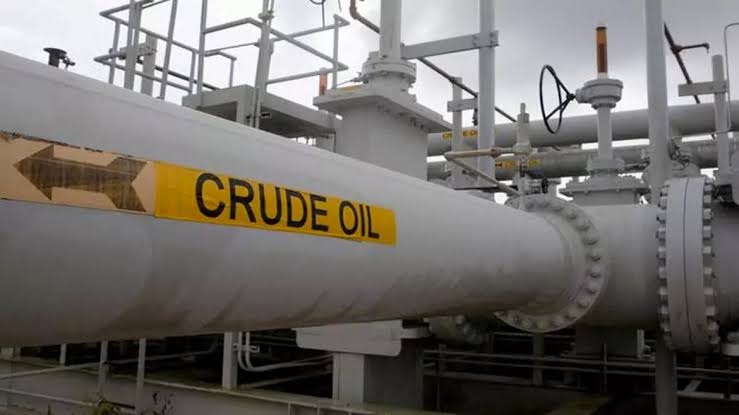
The Crude Oil Refinery-owners Association of Nigeria (CORAN) Urges the Federal Government of Nigeria to Expand Naira-for-Crude Policy to Modular Refineries Amid Rising AGO Prices.
CORAN has called on the Federal Government and the Presidential Committee on the Naira-for-Crude Initiative to urgently expand the program to include modular refineries across the country.
This appeal comes against the backdrop of escalating global crude oil prices triggered by the ongoing tensions in the Middle East, which have directly impacted the domestic price of Automotive Gas Oil (AGO), commonly known as Diesel. AGO remains one of the most critical fuels driving Nigeria’s economy. It powers factories, farms, construction sites, telecommunications infrastructure, and small and medium-scale enterprises and even homwes. It is also the primary fuel used in transporting agricultural produce from rural hinterlands to urban markets. Any sustained increase in AGO prices translates directly into higher food inflation, increased production costs, and additional economic strain on Nigerian households and businesses.
While the current Naira-for-Crude policy has provided some relief within the downstream sector, its limited coverage has constrained its full economic impact. Expanding the initiative to include modular and independent refineries such as Aradel Holdings Plc, OPAC Refinery, Walter Smith Refinery, and Edo Refinery and Petrochemicals Company would significantly boost local refining output, particularly AGO production.
Under an expanded Naira-for-Crude framework:
Modular refineries would access crude feedstock in local currency, reducing exposure to forex volatility.
Refining capacity utilization would increase, enabling higher production volumes of AGO.
Operational costs would decline, allowing refiners to supply diesel at more stable and reasonable prices.
Supply reliability within the domestic market would improve, reducing dependence on imports.
CORAN emphasizes that modular refineries were licensed to strengthen Nigeria’s energy security, deepen local value addition, and reduce refined product imports. However, without consistent and competitively priced crude supply, their ability to cushion market shocks remains limited.
Expanding the Naira-for-Crude initiative is not merely a sectoral adjustment—it is an economic stabilization measure. By empowering indigenous refiners to operate optimally, the Federal Government can directly moderate the impact of global volatility on domestic diesel prices, protect food supply chains, and sustain industrial productivity.
CORAN therefore respectfully urges the Federal Government and the Presidential Committee to act swiftly in broadening the scope of the policy to fully integrate modular refineries into the framework.
Nigeria’s energy security and economic resilience depend on it.
Signed:
Crude Oil Refinery-owners Association of Nigeria (CORAN)
- By:CORAN
- 0 comment

Leave a Reply